A simple daily habit
One 2 fl oz shot, five mornings, one bottle. No capsules to count and no powder to mix. Pour, drink, go.
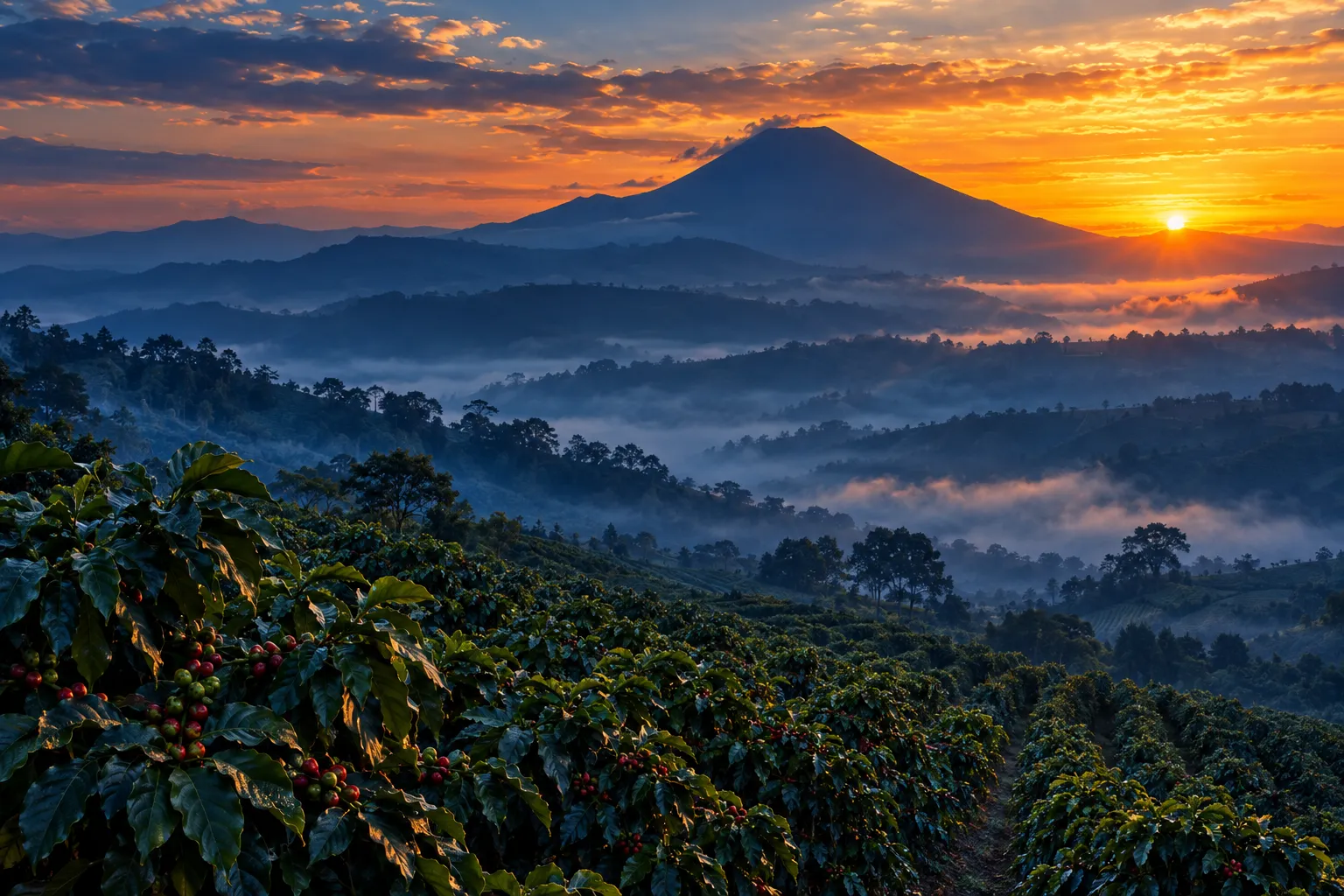
Launching 2028 · From El Salvador
First Light at 5:03 AM is a ready to drink green coffee extract with mango, pineapple and orange. Grown in the shadow of Santa Ana Volcano. Bottled for the first quiet minute of your morning.
One note when lab results are in, one when preorders open, one at launch.
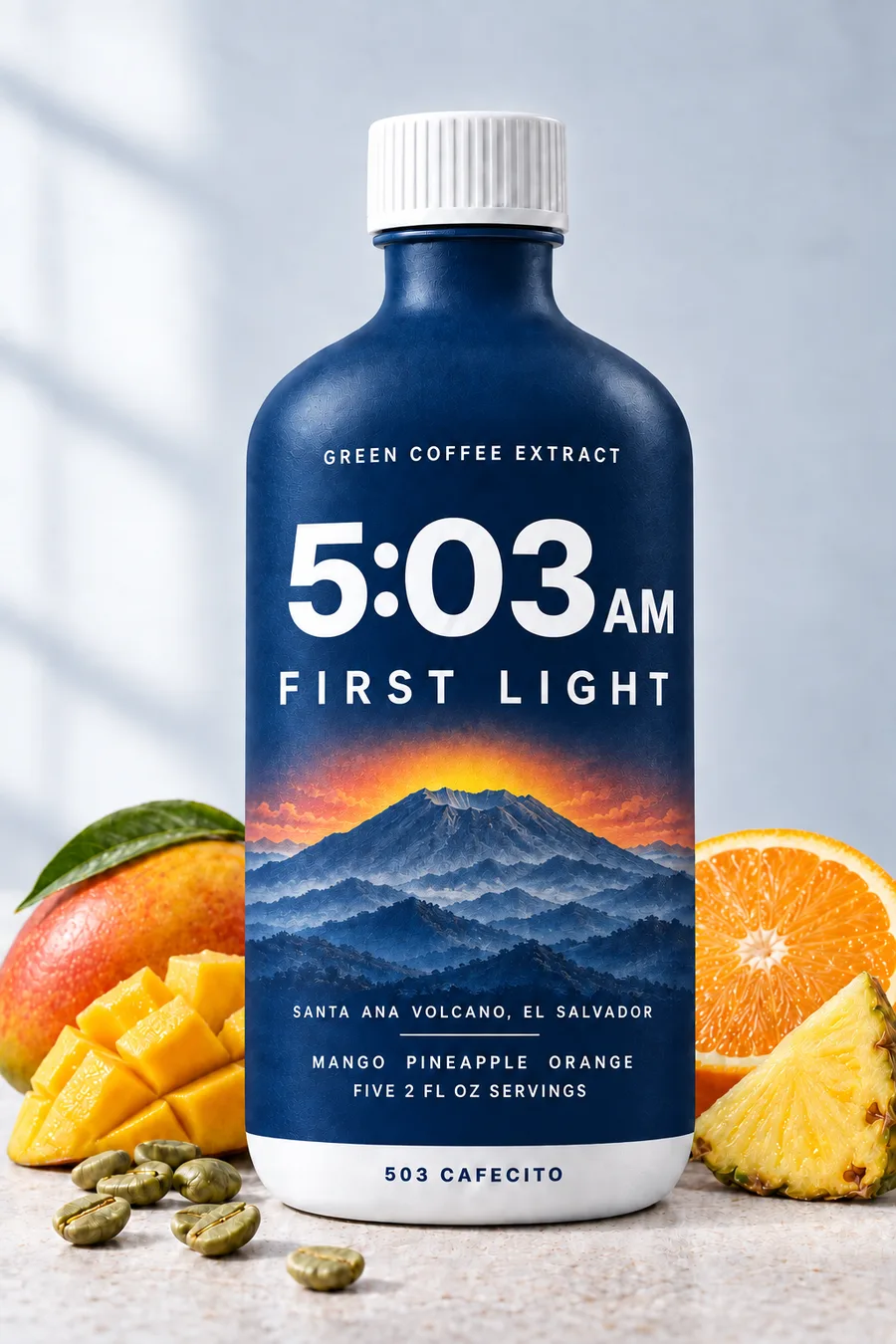
What it is for
First Light is a cold, fruit flavored shot of green coffee extract. Here is what it is meant to do for your day, and what it is not.
One 2 fl oz shot, five mornings, one bottle. No capsules to count and no powder to mix. Pour, drink, go.
Green coffee extract has a bitter, earthy edge on its own. Mango, pineapple and orange soften it into something you look forward to.
The draft label estimates 8 mg of caffeine per shot, far less than a cup of brewed coffee. Lab testing confirms the final number.
Every bottle carries a lot code that leads back to a named Salvadoran farm, with a Certificate of Analysis on file.
Chlorogenic acid is among the most studied compounds in coffee. We link the research so you can read it yourself.
First Light is a drink. It is not a medicine and does not diagnose, treat, cure or prevent any disease. If you are pregnant, breastfeeding, take medication or have a medical condition, ask a health care provider first.
The ritual
No powders, no capsules, no counting. Shake the bottle, pour a 2 fl oz shot, and start the day with something that tastes like sunrise. Pick a day to see how a bottle runs through the week.
5 shots
A full bottle. Pick a day to pour.
Five 2 fl oz servings in a 10 fl oz bottle. Refrigerate after opening.
Why green coffee
Chlorogenic acid, or CGA, is a natural compound in coffee beans. Heat breaks it down, so a green, unroasted bean holds far more than a roasted one. First Light starts with green coffee from our own supply chain.
About six fold lower from green to dark roast
CGA content by roasting degree in one published study.1 Values are for that study's samples, not for First Light.
Green coffee beans
Eggplant, carrots, apples and similar foods
Per 100 g of dry weight, a wide gap
Green coffee beans per a food chemistry review.8 Other foods per a review of CGA in foods.9 Ranges vary by variety and origin.
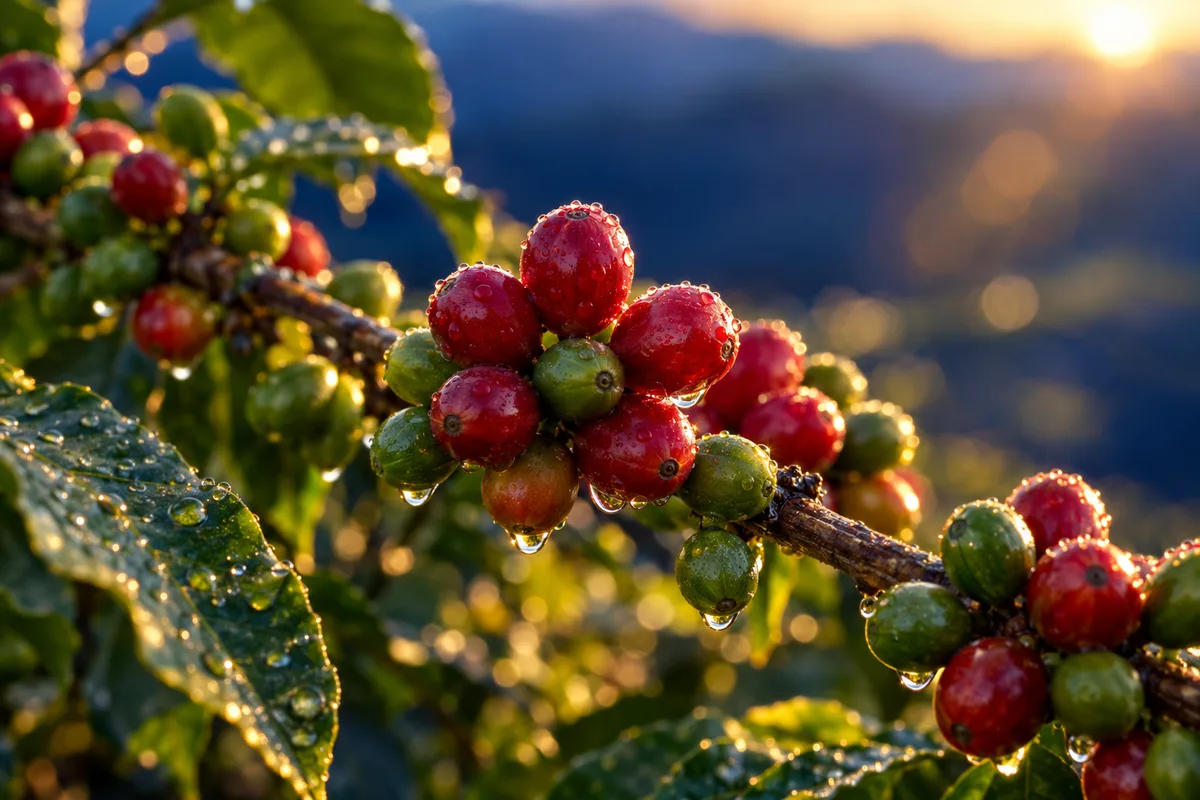
The cell protection approach
Your cells deal with free radicals every day. Here is how chlorogenic acid is studied in that picture, in three steps.
Normal metabolism and outside exposures such as air pollution, sun and smoke produce them. When they outpace the body's defenses, the imbalance is called oxidative stress.34
In lab studies, chlorogenic acid can neutralize free radicals directly through its chemical structure.5
CGA also helps activate the cell's own antioxidant defenses, including the Nrf2 pathway, in lab and animal studies.6
Simplified illustration of findings from lab and animal studies. It is not a promise of results in people.
After you drink it
Lab results are one thing. Digestion is another. Here is the honest path from the glass to the cell, including the limits of the evidence.
The source
503 is the country code of El Salvador. The name on the cap is the place the coffee comes from. First Light comes out of the same farm to shop chain as our roasted coffee on 503cafecito.com, with named farms and the mills that process the harvest.
Named producers near Santa Ana Volcano. Variety, process and elevation recorded.
Green beans selected and prepared in El Salvador.
Green coffee extracted by a food grade partner, to be named before launch.
Blended with mango, pineapple and orange, then bottled cold.
Accredited lab testing with a Certificate of Analysis, then a lot code on the cap.
Planned process. Production partners are confirmed and named before launch.
Meet the coffee at 503cafecito.comWhat sets it apart
Daily shots are a proven habit. Most tell you what is inside. First Light also tells you where it grew.
| Topic | The usual wellness shot | First Light at 5:03 AM |
|---|---|---|
| Where it starts | A formula and a brand story | A named farm at the foot of Santa Ana Volcano |
| Traceability | Rarely shown to the shopper | Lot code on the cap, Certificate of Analysis on file |
| Flavor | Often flavored with sweeteners or extracts | Mango, pineapple and orange juice, no added sugar |
| The big idea | Big promises on the front of the bottle | Plain language, with research linked and labeled early stage |
| Behind it | A supplement company | A coffee company selling direct from farms since 2024 |
The label
Front, story and facts panel, shown the way they will appear on the shelf. We will update the numbers once an accredited lab confirms them.
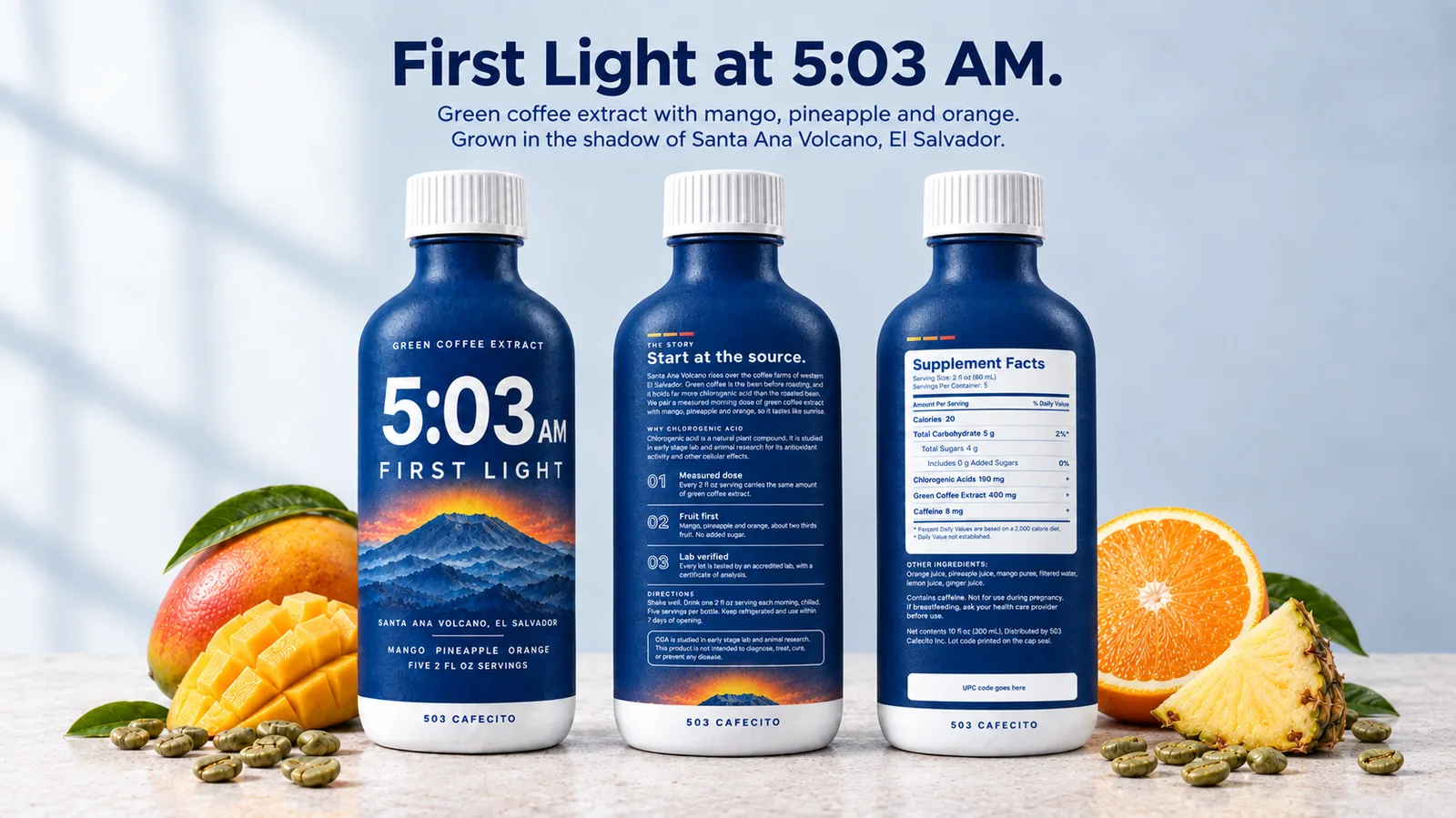
All values are draft estimates. An accredited lab confirms them before launch.
Who is behind it
Roasted Salvadoran coffee sold online, direct from farms to customers.
A green coffee marketplace, live now, for professional buyers.
Green coffee extract with fruit, launching from the same farms.
Founding list
Join the list for the 2028 launch. We will write when lab results are published, when preorders open, and on launch day. Nothing else.
Your email app opens with a ready message. Press send and you are on the list.
Questions
It gives you a simple morning ritual: one cold, fruit flavored shot of green coffee extract with a light amount of caffeine, from a farm you can trace. Researchers study chlorogenic acid for its antioxidant activity in cells, but that work is early stage lab and animal research, so we do not promise health results.
It is how researchers describe antioxidants. Free radicals can strain cells, and in lab and animal studies chlorogenic acid neutralizes them and supports the cell's own defenses. See the cell science section above for the sources and the limits of the evidence.
First Light is planned for 2028. Sales channels are not final. Join the list and you will hear first.
Green coffee extract, orange juice, pineapple juice, mango puree, filtered water, lemon juice and ginger juice in the current draft. The final panel is confirmed before launch.
Yes. Green coffee naturally contains some. The draft label estimates 8 mg per serving, pending lab testing. It is not for use during pregnancy, and anyone who is breastfeeding should ask a health care provider first.
First Light is a drink. Chlorogenic acid is studied in early stage lab and animal research. This product is not intended to diagnose, treat, cure, or prevent any disease.
Keep it refrigerated and use within 7 days of opening, as in the current draft. Shake well before each 2 fl oz serving.
503 Cafecito Inc., a coffee company that has sold roasted Salvadoran coffee online at 503cafecito.com since 2024 and supplies green coffee to professional buyers at mypourover.com.